

How Hot Is Too Hot for Dogs to Play Outside
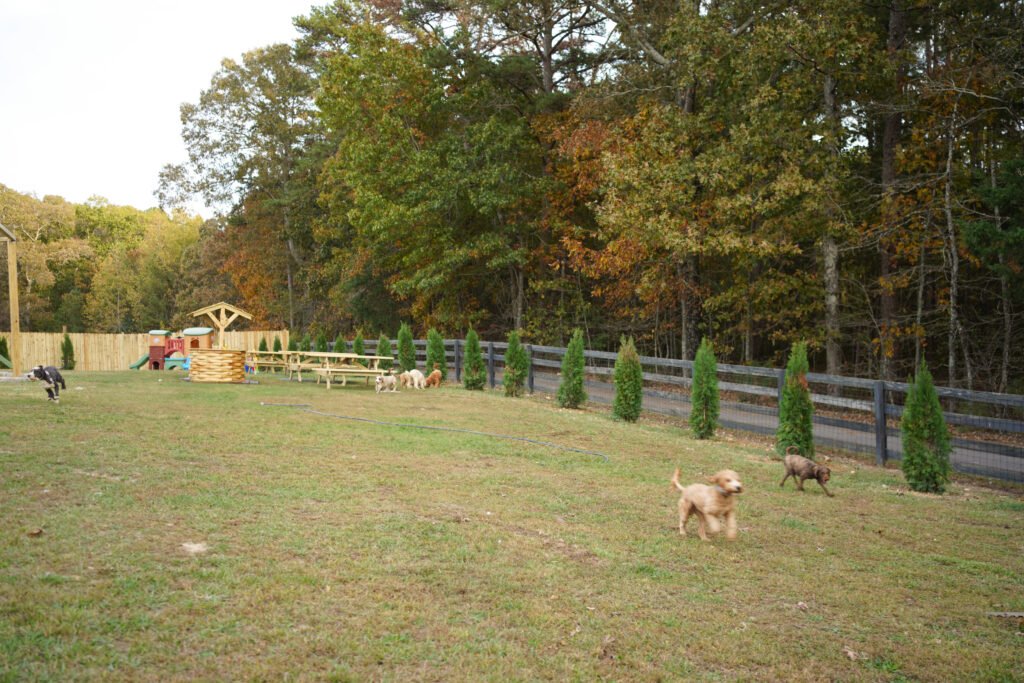
As a general rule, most dogs are comfortable playing outside up to about 80°F, start to struggle above 85°F, and should stay indoors or limit outdoor time to short breaks once it hits 90°F or higher. Humidity lowers every one of those numbers, which matters a lot in Georgia, where a muggy 85°F day can feel far more dangerous than a dry one. The quickest field check is the pavement test: press the back of your hand to the ground for seven seconds, and if you cannot hold it there, it is too hot for your dog’s paws. At Bestland Dog Boarding and Pet Resort near Rome and Cartersville, outdoor play happens on shaded, grassy paddocks rather than hot pavement, and dogs move into climate-controlled indoor space when the heat climbs.
The temperature is only half the picture, since humidity, surface heat, and your dog’s own breed and age all change how quickly warm weather turns risky. Here is how to read those factors and keep play safe on hot Georgia days.
How hot is too hot? A temperature guide for dogs
Dogs handle heat differently than people. They cool themselves mainly by panting, with a little help from the sweat glands in their paw pads, and that system loses efficiency fast as the temperature rises. Use these ranges as a starting point:
- Under 80°F: Comfortable for most dogs. Normal play and outdoor time are fine with shade and water available.
- 80°F to 85°F: Use caution. Healthy adult dogs are usually okay for active play, but watch high-energy dogs and take more breaks.
- 85°F to 90°F: Dogs begin to struggle. Keep outdoor activity shorter and lower-key, stick to shade, and skip hard exercise.
- 90°F and above: Risky for most dogs. Limit outside time to quick potty breaks, and move play indoors. Flat-faced, senior, and very young dogs should only be out for a few minutes.
These are guidelines, not hard lines. Your dog’s age, breed, weight, and coat all shift where the danger starts, and humidity shifts it further.
Why humidity matters so much in Georgia
Air temperature only tells part of the story. Panting works by evaporating moisture, and when the air is already thick with moisture, that cooling process slows down. A dog can overheat on an 85°F day with high humidity faster than on a drier 90°F day.
That is why the heat index, which combines temperature and humidity, is a better safety gauge than the thermometer alone during a Northwest Georgia summer. When the air feels heavy and still, treat the day as hotter than the number on the forecast.
The pavement test: check the ground before they play
Surfaces get far hotter than the air above them. On an 86°F day, asphalt in direct sun can reach 135°F, more than hot enough to burn paw pads within a minute. Pavement, patios, and even some artificial turf hold that heat long after the sun moves.
The test is simple: place the back of your hand flat on the surface and hold it for about seven seconds. If it is too hot for your hand, it is too hot for your dog’s feet. This is one reason real grass matters. A shaded, grassy yard stays dramatically cooler than concrete or asphalt, which is exactly the kind of terrain your dog plays on at our farm.
Which dogs overheat the fastest
Some dogs need extra caution well before the thermometer hits 90°F. Watch closely if your dog is:
- Flat-faced (brachycephalic) like a Bulldog, Pug, Boxer, or Shih Tzu, since short airways make panting less effective
- A puppy or a senior, because their bodies regulate temperature less efficiently
- Overweight, which adds strain and traps heat
- Thick or dark-coated, which holds warmth and absorbs sunlight
- Very high-energy, since these dogs often push past their limits during play
- Managing a health condition such as heart or respiratory issues
If your dog fits one of these, plan for shorter outdoor sessions, more shade, and closer monitoring on warm days.
Signs your dog is overheating and what to do
Heat stress can turn into heatstroke quickly, sometimes within 30 minutes, so catching it early is everything. Watch for:
- Heavy, frantic panting that will not slow down
- Thick drooling or a bright red tongue and gums
- Weakness, stumbling, or seeming disoriented
- Vomiting or diarrhea
- Collapse or unresponsiveness
If you see these signs, move your dog to shade or air conditioning right away, offer cool (not ice-cold) water, wet their paws and belly with cool water, and call your veterinarian. Heatstroke is a medical emergency, so do not wait to see if your dog improves on their own.
If it feels too hot for you to stand comfortably in the sun, it is already too hot for your dog to run in it. When in doubt, bring them into the shade and cool water.
How we handle hot days
Summer does not shut down the fun here, it just changes how we run the day. On our quiet 40-acre farm, outdoor play is built around keeping every dog cool and safe:
- Shade and grass, not hot pavement. Our six large paddocks are shaded, with real grass and natural terrain that stays far cooler underfoot than concrete.
- Cooler play windows. We lean into early-morning and later-afternoon play when temperatures are lowest, and ease off during the hottest stretch of the day.
- Shorter rotations, more indoor breaks. As the heat index climbs, outdoor sessions get shorter and dogs come into our climate-controlled, crate-free indoor space to rest and cool down.
- Water always available. Fresh, cool water and shaded rest areas are part of every paddock.
- Small groups mean close watching. Because we keep guest numbers low, our family team can keep real eyes on each dog and spot the earliest signs of heat stress.
- Extra care for at-risk dogs. Flat-faced, senior, young, and thick-coated guests get shorter outdoor time and closer monitoring by design.
You can see our shaded paddocks and cool indoor spaces on our facility tour, or explore day-to-day play on our dog daycare page.
Frequently asked questions
Above 85°F, keep walks short and shaded, and once it reaches 90°F, limit outdoor time to quick potty breaks. Always check the pavement with your hand first, since the ground runs much hotter than the air.
For most dogs, yes, for anything beyond a few minutes. At 90°F and up, move play indoors, provide constant shade and water, and be especially careful with flat-faced, senior, and young dogs.
High humidity makes panting less effective, so dogs overheat faster. In humid Georgia weather, treat the day as hotter than the thermometer reads and rely on the heat index.
Watch for heavy nonstop panting, thick drooling, bright red gums, weakness, or disorientation. Move your dog to a cool spot, offer cool water, and call your vet if the signs do not ease quickly.
Yes. On hot days, outdoor sessions are shorter and scheduled for cooler hours, with shaded grass, fresh water, and climate-controlled indoor breaks in between.
How to Reach Us
Location
2500 Euharlee Rd SE, Rome, GA 30161
Hours
We’re available by phone or email daily from 7am to 5pm
Keep your dog cool and cared for near Rome and Cartersville
Want your dog to enjoy summer safely while you are away or at work? Bestland Dog Boarding and Pet Resort offers cage-free care on a shaded, grassy 40-acre farm, where small groups mean our family team watches every dog closely and adjusts play to the heat. Call (770) 709-8497 to book a stay, set up a daycare day, or ask about our summer routine. We proudly care for dogs from Rome, Cartersville, and nearby areas of Northwest Georgia.