How Dog Daycare Playgroups Are Matched
A good dog daycare does not simply put every dog in one big yard and hope for the best. Playgroups are matched by size, energy level, temperament, and play style, kept small, and supervised closely so every dog plays in a group where they feel comfortable. At Bestland Dog Boarding and Pet Resort near Rome and Cartersville, six large shaded paddocks give us the room to place each dog with compatible playmates. It starts with a meet-and-greet to get to know your dog, and we adjust groups through the day based on what each dog shows us.
The right match comes down to reading each dog as an individual, pairing compatible sizes, energy levels, and play styles so the group clicks. Below is what goes into that and why it makes such a difference.
Why matching dogs matters
Dogs are social, but that does not mean every dog enjoys the same kind of play. A bouncy young retriever and a quiet senior have very different ideas of a good time. When too many mismatched dogs share one space, the calmer ones often get overwhelmed and end up hovering on the edges instead of actually playing.
Thoughtful matching fixes that. When a dog is grouped with playmates who share their size, energy, and style, play feels natural and low-stress. The shy dog builds confidence, the high-energy dog burns off steam, and everyone goes home happy and tired rather than frazzled.
What we look at when building a group
Size is the obvious starting point, but it is only one piece. When we decide which dogs play together, we weigh several things:
- Size and strength. Big and small dogs often play more comfortably apart, so a large, rowdy dog is not overwhelming to a little one.
- Energy level. High-energy zoomies dogs and mellow, slow-paced dogs each do better with company that matches their pace.
- Temperament. Confident, pushy, gentle, or cautious dogs all need the right company to feel at ease.
- Play style. How a dog likes to play matters as much as how big they are.
- Age. Puppies, adults, and seniors tend to have different stamina and tolerance for rough play.
- Confidence and social skills. A timid dog thrives in a calmer, smaller group while they warm up.
Breed can hint at some of these, but we watch the actual dog in front of us rather than assuming based on breed alone.
Dog play styles, explained
Two dogs of the same size can still be a poor match if they play completely differently. Common styles include:
- Wrestlers. Mouthy, body-slamming, hands-on play. Great fun between two dogs who both enjoy it, too much for a dog who does not.
- Chasers and runners. Dogs who love a good game of chase and zoomies, best paired with others who like to move.
- Gentle and parallel players. Dogs who prefer sniffing, exploring, and relaxed company side by side rather than full-contact play.
- Toy-focused players. Dogs who center their fun on a ball or toy and enjoy playmates who share, not swipe.
Matching compatible styles is how we keep play fun instead of frustrating.
The goal is not just a safe group. It is a group where your dog actually wants to play, with company that fits how they like to spend the day.
It starts with a meet-and-greet
Before a dog joins daycare, we start with a relaxed meet-and-greet. This no-pressure visit lets us see how your dog responds to new people, new dogs, and a new space, and it tells us a lot about where they will fit best. It also lets your dog get comfortable with our family and our farm before their first full day. We use everything we learn to place them with the right playmates from day one.
How we use our six paddocks
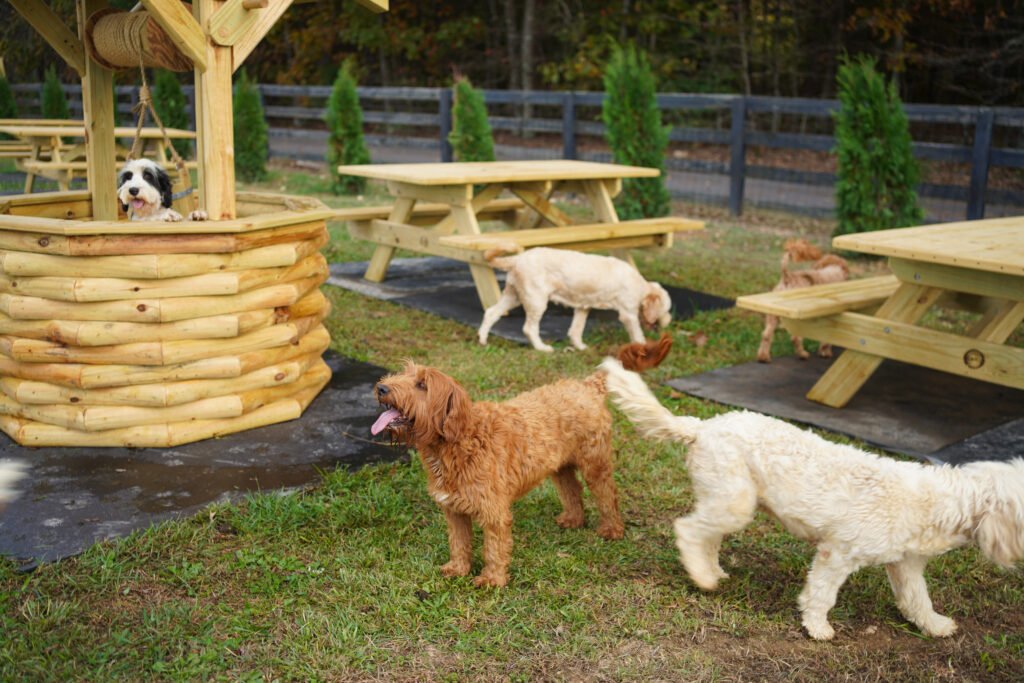
Having space is what makes real matching possible. Our six large, shaded paddocks give us room to run more than one group at a time instead of cramming everyone together.
That means the high-energy crew can tear around the open paddocks while a calmer group enjoys a quieter space nearby. Every group plays in a secure, supervised zone rather than roaming the full property, so we always know where each dog is and how they are doing. Because we keep our guest numbers low, our family team can keep real eyes on every dog and step in early if play needs a nudge.
How we adjust through the day
Playgroups are not set in stone. Dogs change through the day as they warm up or wind down, so a dog in a lively morning group might join a mellower afternoon group once the edge is off. We watch for the small signals, a dog who needs a break, one who is getting overstimulated, or a pair who click, and we rearrange as needed. Rest is built into the day too, so dogs are not running nonstop. You can see more of where all of this happens on our facility tour, or learn about the full program on our dog daycare page.
Frequently asked questions
By weighing size, energy level, temperament, play style, age, and confidence, then observing real interactions and adjusting the groups as the day goes on.
No. Size is a starting point, but energy, temperament, and play style matter just as much. Two dogs of the same size can still be a poor match if they play very differently.
At Bestland, your dog starts with a relaxed meet-and-greet so we can see how they do with people, dogs, and a new space, and place them in the right group.
Shy and anxious dogs do well in smaller, calmer groups where they can build confidence at their own pace, which our low guest numbers make easy.
We keep groups small on purpose, so staff can supervise closely and every dog gets attention rather than getting lost in a crowd.
How to Reach Us
Location
2500 Euharlee Rd SE, Rome, GA 30161
Hours
We’re available by phone or email daily from 7am to 5pm
Give your dog the right playmates near Rome and Cartersville
Want your dog to spend the day with company that actually fits them? Bestland Dog Boarding and Pet Resort offers cage-free, small-group daycare on a quiet 40-acre farm, with six shaded paddocks where our family team matches every dog thoughtfully. Call (770) 709-8497 to set up a first-visit meet-and-greet or ask about daycare days. We proudly care for dogs from Rome, Cartersville, and nearby areas of Northwest Georgia.